Rust Tooling: Status and Evolution on 2025
Some important changes are coming to the Rust tooling ecosystem, learn more in this blogpost!
While each blockchain has its own theoretical finality and transaction price, we wanted to know: how long does my app actually need to wait for a transaction to be final, and how much will it pay?
To answer these questions, we sent transactions across 6 different chains to compare both finality times and transaction fees.
As an backend developer you are adept at building robust services, managing databases, and ensuring system reliability. When you hear "blockchain" it might sound like a completely different paradigm. However, platforms like NEAR Protocol are designed to be surprisingly accessible, offering a new kind of backend infrastructure that leverages many concepts you are already familiar with.
NEAR has a unique key management system that allows each account to have multiple access keys. Each of these keys can be one of two types: Full-Access Keys and Function-Call Keys.
Full-Access Keys are the traditional type of key you might be used to, which provide complete control over an account, allowing the holder to perform any action, including transferring funds, deploying contracts, and managing other keys.
On the other hand, Function Call Keys allows you to provide restricted access to third parties. This key type, unique to NEAR, enables several use-cases worth discussing.
Let's explore some of the main benefits of Function-Call Keys.
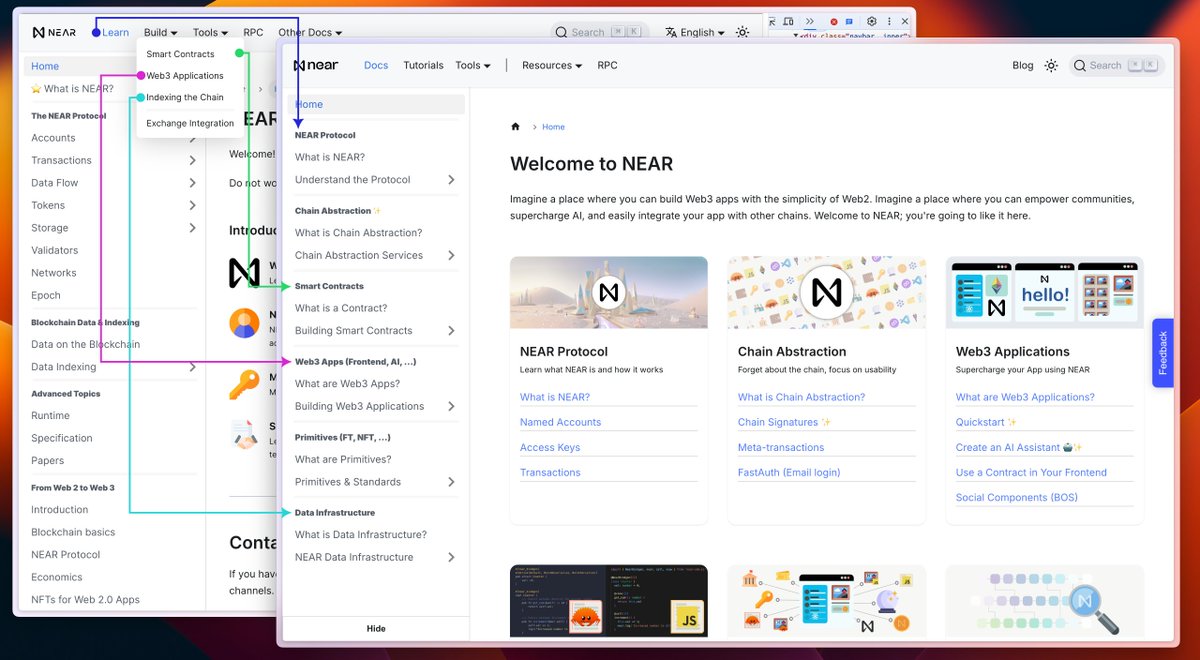
2024 was a great year for NEAR Docs! Let's take a look at what we achieved together

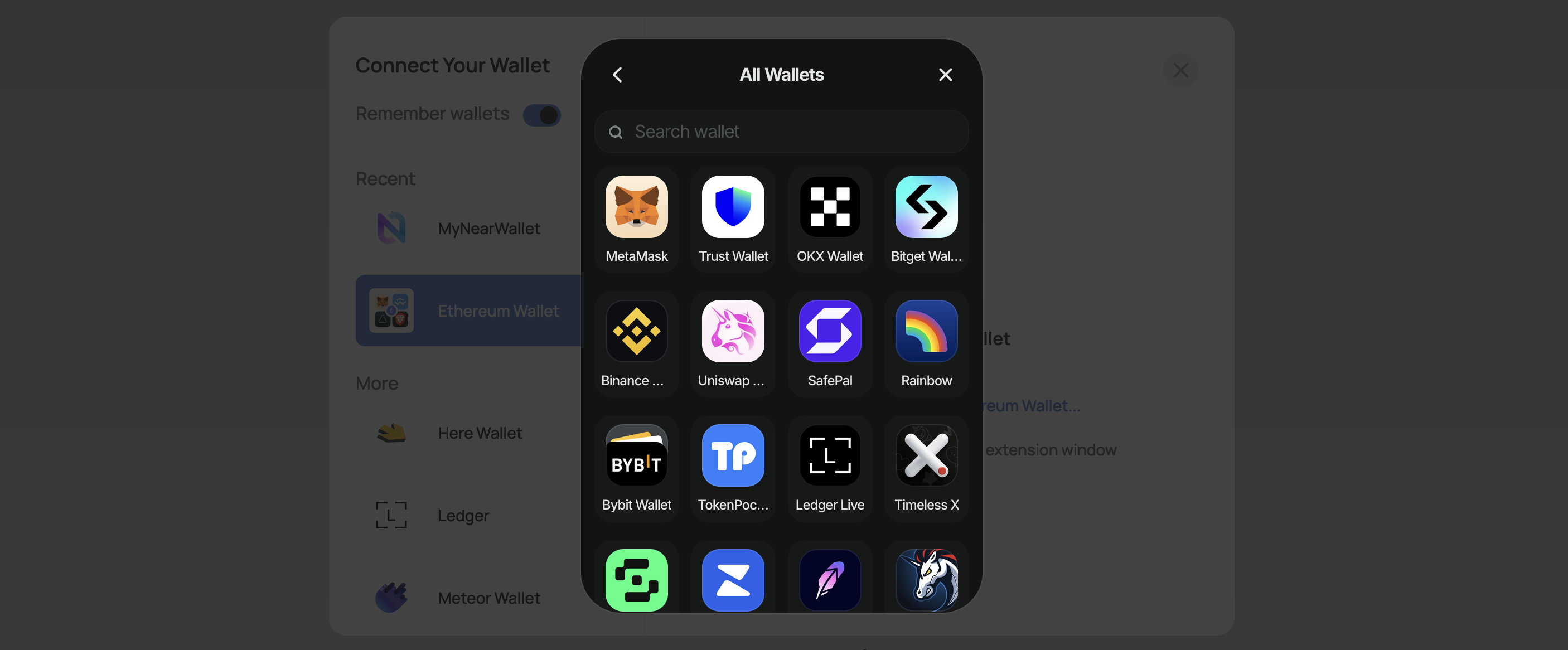
You can now login using MetaMask, WalletConnect and +400 Ethereum Wallets on Near!

You might have noticed that a new tutorial has been added to the docs! This multi-part series is all about learning to build full applications on NEAR; you will see how to build an on-chain auction from start to finish, including the smart contract, deploying it on-chain, and creating a frontend to interact with it.
As the NEAR ecosystem continues to decentralize, Pagoda will cease operations within the next six months and decentralize its functions into NEAR ecosystem teams and committees. This document describes the transition plan for each of the services, activities, and tools that Pagoda develops or operates.
From Thursday, July 11 to Saturday, July 13, many visitors to near.org and its subdomains (like dev.near.org and docs.near.org) were unable to reach those websites. Also, NEAR applications that rely on RPC services hosted on near.org were affected. This was due to a security incident followed by an outage from one of our vendors, Squarespace. During this period, the NEAR protocol & blockchain was unaffected by this incident, as it does not rely on any centralized services.
After careful consideration, Pagoda has decided to discontinue its active efforts to improve the B.O.S. Web Engine